


You can usually tell what your dog needs by reading the specifics of how they struggle, not by their age or diagnosis alone. The pattern that points toward a cart is a loss of rear-limb function: paws that drag, a dog who cannot rise or hold weight on the back end. The pattern that points toward a harness is reduced but real function: a dog who still walks but tires, wobbles, or needs a hand on stairs. And a dog who simply slips on smooth floors is showing an earlier, grip-level problem that traction aids solve. Learning to read these signs is what tells you whether to act now, and with what.
At Commonwealth Animal Care in Lexington, we take a diagnostic-first approach to mobility. Our diagnostic services include digital radiography to evaluate joints, soft tissue, and structural change, so we can see what is behind the signs before talking about any device. If your dog’s movement has shifted and you are unsure of the next step, reach out to our team and we will sort it out with you.
Reading the Signs: What to Track
- The struggle tells the story: how your dog moves matters more than how old they are.
- Grip problems come first: slipping on floors is an early, fixable sign.
- Rear-end weakness is the key divider: it separates harness territory from cart territory.
- Sudden changes are different: acute weakness or paralysis is an emergency, not a device decision.
What Should You Watch For First?
The earliest signs are quiet and easy to file under getting older. The usual driver is osteoarthritis, which affects most senior dogs and plenty of middle-aged ones, and it shows up as stiffness after rest, hesitation at stairs, or a dog slipping on floors they used to cross fine. Catching these early matters, because support started sooner preserves more strength.
Just as telling are the behavioral shifts: a usually eager dog who hangs back at the door, sleeps more, or snaps when touched over the hips. Pain and weakness often surface as a change in mood or routine before they look like a limp, so a dog acting off deserves the same attention as one that is visibly struggling.
What Do Your Dog’s Signs Point Toward?
Use what you actually see as the entry point, then confirm it with an exam.
| What you notice | What it may signal | What usually helps |
| Slipping on smooth floors | Lost grip, early change | Traction aids, rugs, rehab |
| Stiff after rest, slow on stairs | Early arthritis or joint pain | Pain control, joint support, ramps, rehab |
| Needs a boost to stand, tires on walks | Real but reduced rear strength | Support harness, rehab |
| Bunny-hopping, favoring one side | Hip or joint trouble | Harness plus a workup |
| Dragging paws, scuffed nails, knuckling | Significant weakness or nerve issue | Harness now, possibly a cart |
| Cannot rise or bear weight behind | Loss of rear-limb function | Mobility cart, rehab |
No single sign is the whole picture, and many dogs show several at once. The table is a way to translate what you are watching into a sense of how urgent it is and where it is heading.
How Can You Tell Early Change From an Emergency?
Most mobility loss creeps in over weeks or months, and that gradual version is the one you assess and plan for. The other version is sudden, and it changes the timeline entirely. A dog who abruptly cannot use the back legs, drags a paw that knuckles under and stays, or collapses and cannot bear weight may be having an acute spinal event. That is a same-day emergency: call ahead and head to the nearest open veterinary facility rather than waiting to see if it improves overnight.
What Do the Rear-Leg Signs Tell You?
The back end is where the most decision-relevant signs show up, because it separates a harness situation from a cart situation. Watch how the rear legs carry the dog.
- Dragging paws or scuffed nails: the dog is not lifting the foot fully, a sign of weakness or nerve involvement.
- Knuckling: the paw folds under and the dog stands on the top of it, pointing to a neurological problem.
- Bunny-hopping or swaying: the hips are unstable or painful.
- Cannot rise or hold weight behind: function is largely gone, which is cart territory.
The further down this list your dog falls, the more support they need, and the sooner a workup helps.
What Do Slipping and Stiffness Signs Tell You?
Signs at the milder end are about grip and comfort rather than lost strength, and they often respond to simple tools. A dog who splays on hardwood but moves fine on carpet has a traction problem, not a weakness problem.
- Rubber toe grips: add grip on hard floors without changing how a dog walks.
- Traction booties for outdoor or rough ground, with soft-sole and hard-sole booties from our pharmacy for indoor traction.
- Resistance bands attach to harnesses and help build strength and improve rear foot placement
- No-knuckling socks help pets who scuff their toes by assisting foot placement and protecting feet
- A friendlier home: small fixes from the arthritis-friendly home for dogs playbook, and for cats, the home modifications for cats guide, take away most of the daily obstacles.
Catching the grip and stiffness signs early heads off the falls and strains that push a dog into faster decline.
How Can You Track the Changes at Home?
Because mobility loss is gradual, the most useful thing you can do between visits is keep a simple record of what you see. A short phone video of your dog walking away from you and back, filmed every few weeks, makes subtle changes obvious that day-to-day memory tends to blur. Note which surfaces give them trouble, how long they last on a walk before tiring, and whether rising from a lie-down is getting harder. Watch the back paws specifically for dragging or knuckling, since those signs carry the most weight in the cart-versus-harness question. Bringing that record to an appointment turns a vague “he seems slower” into something we can measure and act on, and it often catches a trend early enough to slow it.
Which Conditions Are Behind These Signs?
The signs you notice usually trace back to a specific condition, and naming it tells us whether the need is temporary or lifelong.
- Arthritis: the most common cause of mobility decline in older dogs, where stiff mornings, slow rises, and reluctance to jump add up gradually; traction aids, harnesses, and a weight-and-pain plan together make a meaningful difference.
- Intervertebral disc disease and fibrocartilaginous embolism: both can cause sudden weakness; recovery often runs through a rear harness, and the non-progressive FCE frequently improves, though a few dogs keep using a cart.
- Degenerative myelopathy: progressive, so the signs escalate and support climbs from traction aids to harness to cart.
- Hip dysplasia: the bunny-hop and rise-difficulty signs often point here, and a harness eases transitions while weight and pain care address the joint.
- Amputation: after osteosarcoma or trauma leads to loss of a limb, some dogs need a little help with balance and rising; the Tripawds community is a helpful guide for living with three legs.
Once You Recognize the Signs, Which Device Fits?
After you have read the signs, matching the device is mostly straightforward.
Harness territory (the dog still has real, if reduced, function):
- Rear-end harness: for hip weakness when the front end is still strong.
- Full-body support harness: when more than one limb is weak, or when you need a steady lift on stairs.
- Full-body lift harness: for the heaviest support, including in-home transfers and bathroom trips.
Lifting harnesses for hind and front legs are stocked through our pharmacy for these cases, and our team is happy to help make recommendations and adjust fit.
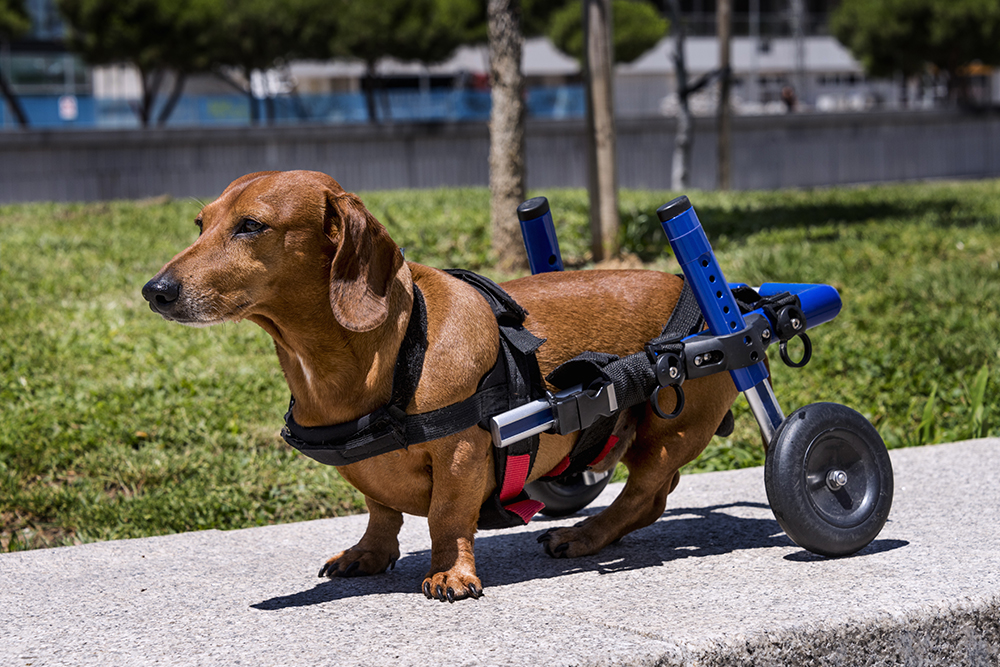
Cart territory (the rear legs can no longer hold or move the dog):
- Mobility carts: restore independence and let an otherwise-bright dog keep moving with the family on walks and around the house.
Fit matters more than brand for either one, so it is worth having the sizing checked rather than guessing from a website.
What Goes Into the Full Plan?
A device is one piece of comprehensive mobility management, not the whole answer. The full plan usually layers several pieces:
- Pain control: anti-inflammatories, monoclonal antibody injections such as Librela for dogs and Solensia for cats, and other medications matched to the cause.
- Weight control: the single highest-leverage change for almost every joint condition, since every extra pound multiplies the load on a struggling joint.
- Joint supplements: glucosamine, chondroitin, msm, omega fatty acids, and green-lipped mussel can all help joints move more smoothly
- Veterinary physical rehabilitation: targeted exercises to help maintain strength and balance
- Ongoing tracking: our wellness and preventive care visits make it easier to catch the signs as they change over time.
Frequently Asked Questions About Recognizing the Need
My Dog Is Slowing Down. Is It Time for a Device Already?
If the slowing is a real change from normal, it is worth an exam, even before an obvious struggle appears. Acting at the slipping-and-stiffness stage, rather than waiting for dragging or an inability to rise, preserves more strength and confidence and often delays the need for a cart.
How Do I Know It Is Cart Time Rather Than Harness Time?
The dividing sign is whether the rear legs can still hold and move your dog. Walking but tiring, or needing a lift to rise, usually means a harness fits; an inability to support weight or take a step behind means a cart. An exam confirms it, especially while the condition is still developing.
Are Mobility Devices Covered by Pet Insurance?
Coverage varies with the policy and whether the underlying condition is covered. Many plans reimburse veterinary-prescribed equipment documented as medically necessary, so check your specific plan before buying.
Can Cats Need Mobility Help Too?
They can, though they show it differently. A cat rarely limps openly; instead it stops jumping to favorite spots, hesitates at the litter box, or grooms less over the back and hips. Those quiet changes deserve the same workup, and many of the same tools, from joint support to a more accessible home, apply.
Helping Your Dog Stay on Their Feet
Knowing whether your dog needs a cart or a harness starts with reading what they show you: grip, strength, and how the back end is holding up. Pair that honest read with a clear diagnosis and most dogs stay comfortable and active far longer than expected.
If your dog’s gait has changed or you are noticing the small signs of mobility loss, request an appointment or reach out to us and we will work through it together.


Leave A Comment