

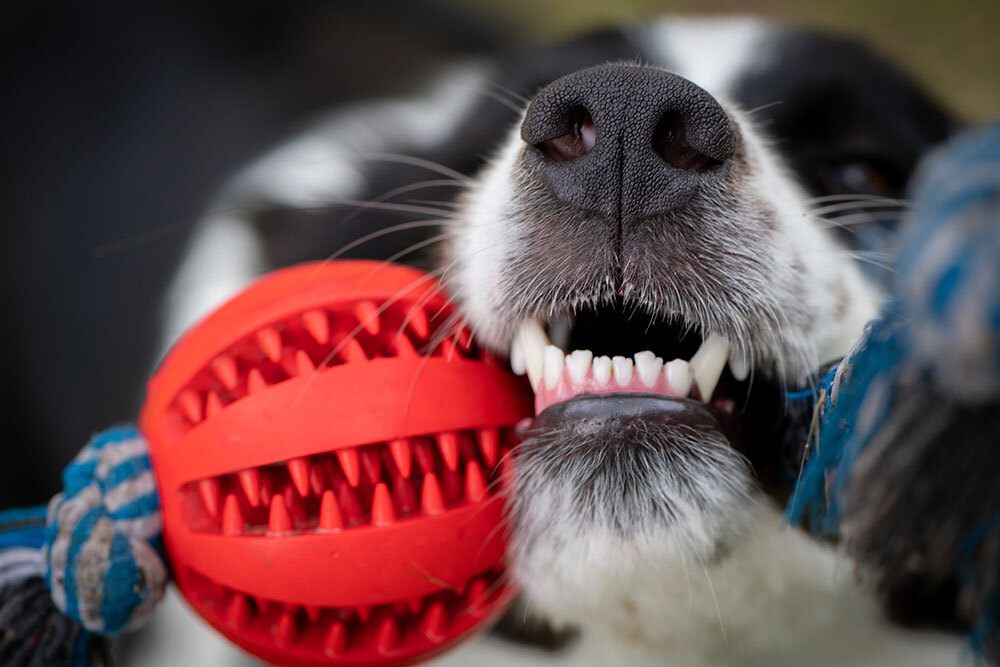
The harness aisle at the pet store is genuinely overwhelming, and most people walk out with whatever looked sturdy and matched the dog’s collar. Same goes for chews, toys, and the leash that’s been hanging on the hook since the dog was a puppy. The trouble is that some of the most heavily marketed pet equipment carries real injury risk under normal use conditions, and the gap between what the industry sells and what veterinary teams see in exam rooms is wider than it should be.
At Commonwealth Animal Care in Lexington, we care about your pet’s comfort and safety beyond the exam room walls, which means having honest conversations about home equipment too. If you have questions about whether what you’re using is appropriate, request an appointment and we’ll walk through it with you. We would always rather answer the question before an injury sends you in.
What Does Your Dog’s Body Language Tell You About Gear Fit?
Your dog is constantly telling you whether their equipment fits and feels right. Learning to read that body language gives you real-time feedback long before a piece of gear produces a visible injury.
Subtle stress signals worth knowing:
- Lip licking when nothing food-related is happening
- Out-of-context yawning that isn’t from being sleepy
- Whale eye: the whites of the eyes show as the dog turns their head
- Tucked tail or low body posture
- Slowing down, freezing, or refusing to move forward
- Avoidance of the space where the gear is stored
Physical warning signs that equipment is causing problems:
- Coughing or gagging during walks
- Repeated head shaking
- Pawing at a collar or harness
- Skin irritation, hair loss, or bald patches under straps
- Reluctance to walk or have the gear put on
Reading body language accurately is one of the most underrated skills you can develop as a dog owner. When your dog shuts down or actively avoids gear, they are telling you something is off, even if the equipment looks fine on paper.
Why Do Veterinarians Recommend Reward-Based Training?
Equipment choice and training method are connected. Tools designed to suppress behavior through pain or pressure (prong collars, choke chains, shock collars) often correlate with the behavioral problems we see in clinic. Positive reinforcement training, where you reward the behavior you want and ignore or redirect the behavior you don’t want, reliably produces better long-term results without the injury risk.
Take leash pulling as an example. The pain-based approach uses a prong or choke collar so each pull triggers discomfort. The dog may temporarily pull less, but the underlying excitement (or fear, or frustration) hasn’t changed. Some dogs habituate to the discomfort and pull anyway. Others develop leash reactivity, where the pain associated with seeing other dogs creates lasting negative associations with everything they encounter on walks.
The positive approach teaches the dog that walking near you pays off. Treats, praise, or play come when the leash is loose. Pulling stops earning attention. Over weeks, the dog actively chooses to walk near you because that is where rewards happen. Tools like the engage-disengage game help reactive dogs learn to look at triggers and back to you for a reward, gradually reshaping the emotional response.
The second approach takes longer in the short term but produces durable, generalized changes without the physical and behavioral fallout of the first.
Training Devices to Avoid
Prong Collars and Choke Chains
Prong collars work by pinching the neck when the dog pulls, while choke chains tighten around the throat. Both rely on pain or pressure to suppress pulling, and both carry documented injury risks.
- Tracheal damage, especially in dogs that lunge or have tracheal collapse
- Soft tissue injuries to the neck
- Spinal injuries from sudden, hard pulls
- Eye and thyroid trauma in cases of severe pulling
- Skin abrasions, ulcerations, and chronic irritation under the device
These tools don’t teach polite walking. They suppress pulling through pain, and the moment the device comes off, the underlying behavior is unchanged. Dogs that experience repeated pain during walks often associate that pain with whatever they were looking at when it happened (other dogs, kids, joggers), creating new behavior problems where none existed before.
Shock Collars and Other Aversive Tools
Shock collars deliver an electric current to suppress behavior. They are marketed for everything from recall training to bark control, and the position on aversive training methods reflects a broad professional consensus against their use.
The risks include:
- Physical injuries: burns, ulcers, and pressure necrosis at contact points
- Behavioral fallout: increased anxiety, fear-based avoidance, and worsening of the very behaviors the device was meant to address
- Generalized aggression: dogs who experience pain at the moment they see a trigger sometimes redirect that learned association into reactive or aggressive behavior toward people, dogs, or other animals
These tools are particularly damaging for fearful or reactive dogs, who already struggle to interpret their environment safely. Adding pain to the mix predictably makes things worse.
Retractable Leash Hazards
Retractable leash risks are underappreciated. The thin cord encourages pulling (because the dog can keep going farther), reduces your ability to recall your dog quickly, and can cause severe injuries when it wraps around legs.
Documented retractable leash injuries include:
- Lacerations and rope burns on you and your pet
- Finger amputations from grabbing the cord during a sudden pull
- Severe injuries when dogs run into traffic at the full extent of the leash
- Loss of control during dog-on-dog or dog-on-person encounters
- Choking and neck injuries when the cord locks suddenly during a fast run
For walks where you want your dog to have more roaming room, a long line (a fixed-length lead, typically 15 to 30 feet) provides controlled freedom without the locking mechanism, thin cord, or sudden snap-back of a retractable leash.
Veterinarian-Recommended Walking Equipment
Collars and Harnesses
Harnesses distribute pulling pressure across the chest and shoulders rather than concentrating it on the neck. They’re especially important for small dogs with tracheal problems or dogs with neck pain.
- Front-clip harnesses discourage pulling by gently turning the dog’s body when they push forward, redirecting them back toward you
- Back-clip harnesses are comfortable and ideal for dogs who already walk politely. They give less pulling control but work well for trained walkers
- Y-shaped harness designs with a strap that runs between the front legs are biomechanically better than designs that cross the shoulder blades, which can restrict shoulder movement
Head halters can help strong pullers by guiding the head, but they require a careful positive introduction. Used without that introduction, they’re frustrating and stressful for the dog and produce little real learning.
For collars, choosing the right collar matters. Flat collars work for ID and sometimes for everyday walking with non-pullers. Martingale collars (a half-slip design that tightens slightly to prevent slip-outs but does not choke) are excellent for narrow-headed breeds like Greyhounds and Whippets, who can back out of standard collars. The fit check is the same regardless of collar type: two fingers should fit snugly between the collar and the neck.
Standard Leashes and Long Lines
For everyday walks, a standard 4-to-6-foot leash provides the best balance of freedom and control. Your dog has enough range to sniff and investigate without dragging you across the sidewalk, and you can react quickly if needed.
For walking nicely on leash, pair a flat collar or harness with a standard leash and reward your dog generously when they walk with the leash slack.
For recall practice and trail walks where you want more room, long line training with a 15-to-30-foot biothane or cotton line is much safer than a retractable leash. The line is held in your hand or attached to a belt, gives you continuous tension control, and doesn’t have the sudden lock-up issue.
Risky Toys and Chews
Toy and chew injuries are among the most common preventable problems we see. Some show up as gastrointestinal foreign bodies needing surgical removal. Others show up as fractured teeth, lacerated mouths, or chronic dental damage. The right product choice keeps almost all of this preventable.
| Toy Type | Why It’s Risky |
| Tennis balls | Abrasive surface wears tooth enamel down quickly with heavy chewers; can wedge in the throat in larger dogs |
| Rope toys | Frayed strands cause linear foreign bodies in the intestines, often requiring surgery |
| Squeaker toys | Become choking hazards once chewed open and the squeaker is exposed |
| Undersized toys | Can be swallowed accidentally during play if too small for the dog’s mouth |
| Hard plastic toys | Crack teeth, particularly the molars |
| Stuffed toys | Filling causes GI obstructions when ingested in large amounts |
Dangerous chews and the chew items we routinely warn against:
| Chew Type | Why It’s Risky |
| Cooked bones | Brittle and prone to splintering, creating sharp shards that perforate the GI tract |
| Raw bones | Carry bacterial contamination risk and fracture teeth, especially in heavy chewers |
| Rawhide | Softens during chewing into a sticky mass that causes choking or obstructs the digestive tract |
| Antlers and hooves | The most common cause of slab fractures of the upper carnassial premolars we see; extractions are major dental procedures |
| Hard nylon bones | Can be gnawed into sharp points or chunks that cut the mouth or get swallowed |
| Small nubs of any chew | Become choking hazards regardless of the chew’s original size |
Warning signs of a chew or toy-related problem worth bringing in: sudden reluctance to eat or chew, drooling more than usual, pawing at the mouth, bleeding from the mouth or a visible broken tooth, and vomiting, lethargy, or abdominal pain after a chew.
If your pet swallows a toy part or shows signs of GI distress, our diagnostics and surgery services handle these cases with expert care, and timing matters. GI obstructions become more dangerous the longer they sit untreated. For dental concerns from chew injuries, our dental care services handle oral exams and tooth extractions when needed. Catching a fractured tooth early often means preventing pain and infection.
Safer Alternatives
The thumbnail test is your best tool for evaluating chew hardness: if you cannot dent the chew with your thumbnail, it is too hard for your dog’s teeth. That single rule eliminates most of the dangerous categories above.
Safer toy options:
- Durable rubber toys that flex under pressure
- Stuffable toys like rubber Kongs filled with frozen peanut butter or plain yogurt for long-lasting enrichment
- Plush toys without internal squeakers, supervised until your pet proves not to be a stuffing-eater
- Puzzle feeders that engage the brain rather than punish the teeth
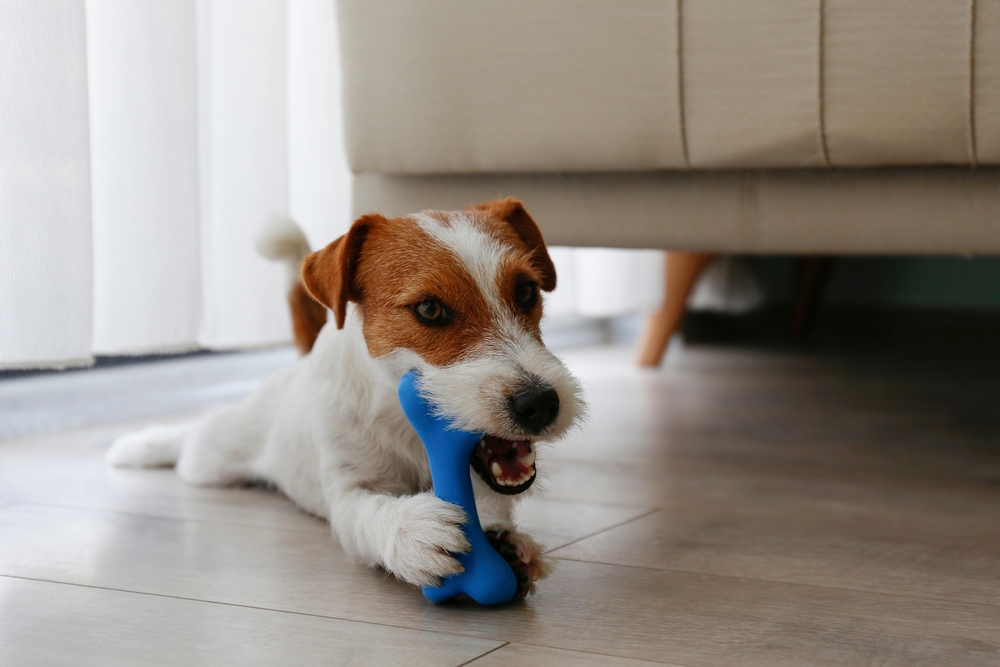
Safer chew options:
- VOHC-accepted dental chews for both cleaning benefit and safety
- Single-ingredient natural chews matched to your dog’s chewing intensity
- Frozen carrots, celery, or sweet potato slices for low-calorie, soft chewing
Our pharmacy carries a range of dog dental chews and treats that pass both the safety test and provide genuine dental benefit.
A few practical reminders: replace worn or damaged toys promptly, match toy size carefully to your dog’s size, supervise the first sessions with any new toy, and take chews away once they reach about a third of their original size. For puppies, prioritize softer options. Their developing teeth and jaws are more vulnerable to damage from hard chews.
When Is Behavior the Real Issue Behind Equipment Problems?
Equipment alone doesn’t fix behavior issues. An anxious dog won’t suddenly become confident on walks just because the leash improved. A reactive dog needs gear that minimizes stress combined with a behavior modification plan that addresses the underlying anxiety.
Sudden behavioral changes are also worth a closer look. A dog who suddenly starts destructive chewing, chewing inappropriate objects, or showing other new behaviors may have an underlying medical issue (dental pain, GI discomfort, anxiety) rather than just a behavior problem. Our wellness and preventive care visits include behavior screening as part of the broader evaluation, so we can rule out medical contributors before recommending behavioral interventions.
Frequently Asked Questions About Pet Equipment Safety
My dog has been wearing a prong collar for years and seems fine. Should I really change?
Damage from these tools accumulates over time and isn’t always visible. Even dogs who appear to tolerate prong collars are at higher risk for tracheal and neck injuries, especially as they age. Transitioning to a well-fitted harness reduces that risk going forward.
Are some breeds more vulnerable to neck injuries?
Yes. Brachycephalic breeds (Bulldogs, Pugs, Frenchies) and toy breeds (Yorkies, Chihuahuas) have particularly delicate tracheas and neck structures. Harness use is especially important for these breeds.
How often should I replace toys and chews?
Toys: as soon as they show damage that creates small parts. Chews: take them away once they reach about a third of their original size. Daily inspection during play is the best practice.
My puppy chews everything. What’s safe?
For young puppies, soft rubber toys, plush toys (supervised), frozen wet washcloths for teething, and softer enrichment chews work well. Avoid hard chews until adult teeth are fully in, and even then, choose ones that pass the thumbnail test.
How do I know if a specific product is safe for my dog?
Popular doesn’t always mean safe. We’re glad to give you a candid opinion on specific products at your next visit.
Partnering for Safer Pet Choices
The right equipment supports your pet’s comfort, behavior, and long-term health. The wrong equipment causes injuries that are entirely preventable. With a little information and the willingness to question some of the most-marketed products, you can make choices that protect your dog from problems we see in clinic every week.
If you’d like personalized recommendations for your dog’s size, behavior, and chewing style, our team is happy to spend time on that during your next visit. Schedule an appointment to talk through equipment choices, training questions, or any concerns you’ve been carrying around. We would always rather have those conversations now than after a preventable problem.




Leave A Comment